For small business owners, one of the most common—and most important—financial questions is:
Should I focus on saving money or investing it?
The truth is, both saving and investing play critical roles in building a strong financial foundation. The key is understanding the benefits and disadvantages of each, and knowing when to prioritize one over the other based on your business stage and risk tolerance.
This guide breaks it down clearly so you can make smarter financial decisions that support long-term growth.
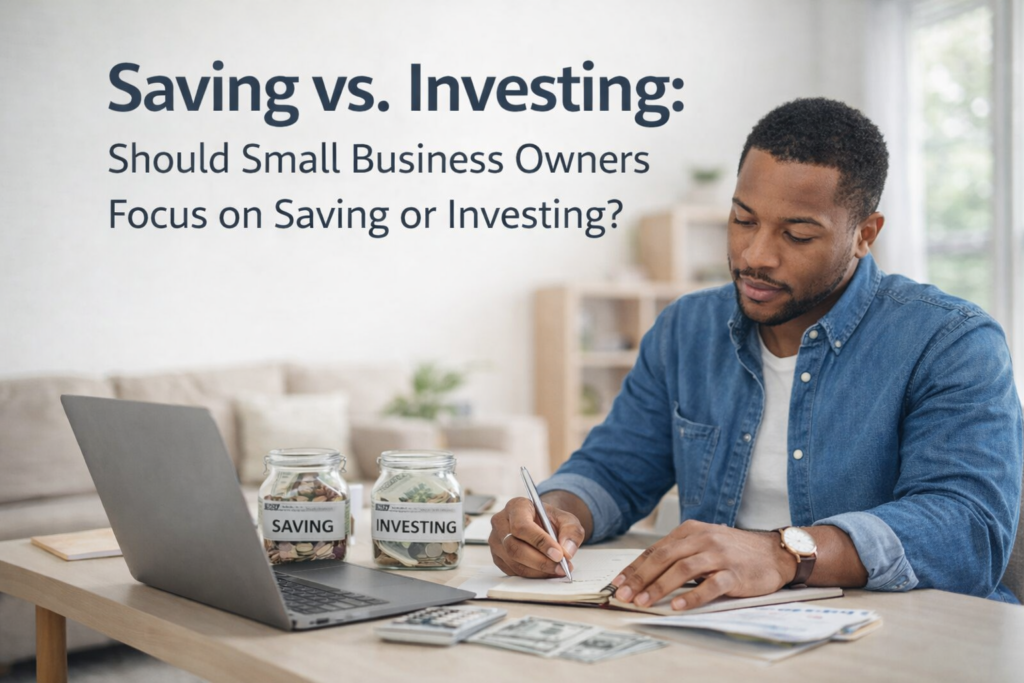
Understanding the Difference Between Saving and Investing
Saving typically involves putting money into low-risk, easily accessible accounts such as savings accounts, money market accounts, or short-term reserves.
Investing involves placing money into assets like stocks, bonds, real estate, retirement accounts, or business growth opportunities with the goal of earning higher returns over time.
Benefits of Saving for Small Business Owners
1. Financial Stability and Emergency Protection
Saving creates a safety net for unexpected expenses like:
- Slow sales months
- Equipment breakdowns
- Emergency repairs
- Payroll gaps
This stability helps prevent reliance on high-interest debt.
2. Liquidity and Accessibility
Savings are easily accessible when you need cash quickly, making them ideal for:
- Operating expenses
- Short-term obligations
- Seasonal business cycles
3. Lower Risk
Savings accounts carry minimal risk, protecting your principal from market volatility—especially important during uncertain economic periods.
4. Peace of Mind
Having cash reserves reduces stress and allows you to make business decisions confidently, without panic-driven choices.
Disadvantages of Saving
1. Low Returns
Savings accounts typically earn lower interest, often failing to keep up with inflation—meaning your money may lose purchasing power over time.
2. Limited Wealth Growth
Relying solely on saving can slow long-term wealth creation for both your business and personal finances.
Benefits of Investing for Small Business Owners
1. Higher Long-Term Growth Potential
Investing allows your money to grow through compounding returns, making it ideal for:
- Retirement planning
- Long-term wealth building
- Business expansion
2. Inflation Protection
Well-chosen investments can outpace inflation, preserving and increasing your buying power.
3. Business Growth Opportunities
Investing in your own business—marketing, systems, equipment, or talent—can often deliver higher returns than traditional savings.
4. Multiple Income Streams
Strategic investing can create passive or semi-passive income streams, reducing reliance on one revenue source.
Disadvantages of Investing
1. Market Risk
Investments fluctuate in value and can lose money in the short term, which may impact cash flow if funds are needed quickly.
2. Limited Liquidity
Some investments, such as real estate or long-term accounts, are not easily converted to cash without penalties or delays.
3. Requires Knowledge and Discipline
Investing successfully requires education, planning, and patience. Poor decisions or emotional investing can lead to losses.
So… Should You Focus on Saving or Investing?
The Smart Answer: Both—In the Right Order
For most small business owners, the ideal strategy looks like this:
Step 1: Build a Strong Savings Foundation
- 3–6 months of operating expenses
- Emergency fund for personal finances
- Cash buffer for slow seasons
Step 2: Invest Strategically
Once your foundation is secure, allocate excess funds toward:
- Business growth investments
- Retirement accounts
- Long-term investment vehicles
This balanced approach minimizes risk while maximizing growth potential.
Saving vs. Investing at Different Business Stages
Early-Stage Businesses
✔ Prioritize saving
✔ Build cash reserves
✔ Stabilize cash flow
Growth-Stage Businesses
✔ Maintain savings
✔ Increase investing in expansion and systems
Established Businesses
✔ Strong emergency reserves
✔ Focus more on investing for wealth and legacy
Final Thoughts for Small Business Owners
Saving protects your business.
Investing grows your business.
The most successful entrepreneurs don’t choose one—they use both strategically. A well-balanced financial plan gives you flexibility, security, and long-term success.
If you’re unsure how to structure your savings and investment strategy, start by:
- Reviewing your cash flow
- Identifying risk tolerance
- Setting clear short- and long-term goals
Those steps alone can dramatically improve your financial outcomes.
Need Personal Or Business Funding? Prestige Business Financial Services LLC offer over 30 Personal and Business Funding options to include good and bad credit options. Get Personal Loans up to $100K or 0% Business Lines of Credit Up To $250K. We provide Business Credit building (Paydex80) services and Personal Credit building servcies Also Enhanced Credit Repair ($249 Per Month) and Passive income programs (Can Make 5-10% Per Month; Trade $100K of Someone Esles Money). Our 2nd Passive Income Program could make 1-2% Per Day Compounding ($500 to Start, In 2 years could be $6 Million).
Book A Free Consult And We Can Help – https://prestigebusinessfinancialservices.com
Email – anthony@prestigebfs.com
Phone- 1-800-622-0453